ReactForm: build a form, publish a link, or export the React code
· 4 min read
On this page
Every side project eventually needs a form — a contact form, a signup form, a job application. And it's always the same slog: stand up an endpoint, wire up email delivery, add validation, then restyle the inputs so they don't look like they escaped a different app. For something that's rarely the interesting part of the product, it eats a surprising amount of time.
ReactForm is what I built to skip that slog: drag fields into sections, publish with a shareable link and start collecting responses immediately — or export a clean React / Next.js component and drop it straight into your own codebase. No backend either way.
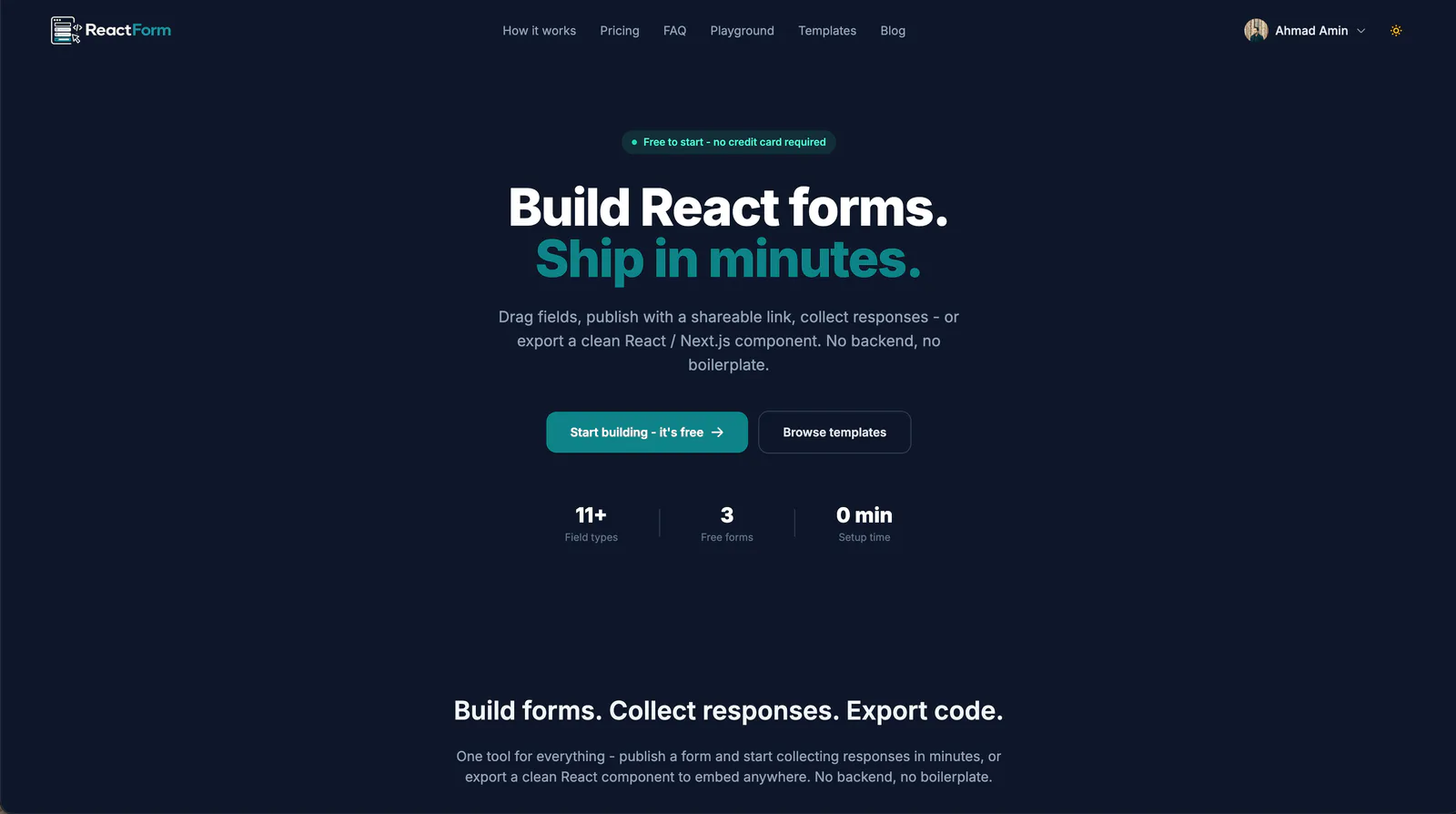
Two ways to ship the same form
Most form tools force a choice up front: a hosted form with someone else's styling, or a code snippet you have to wire up yourself. ReactForm treats those as two exports of the same form instead of two products.
- Publish it and get a shareable link, a QR code, and an embed snippet — responses land in a dashboard, no server required.
- Export it as a typed React or Next.js component and own the markup, styling, and submit handler yourself.
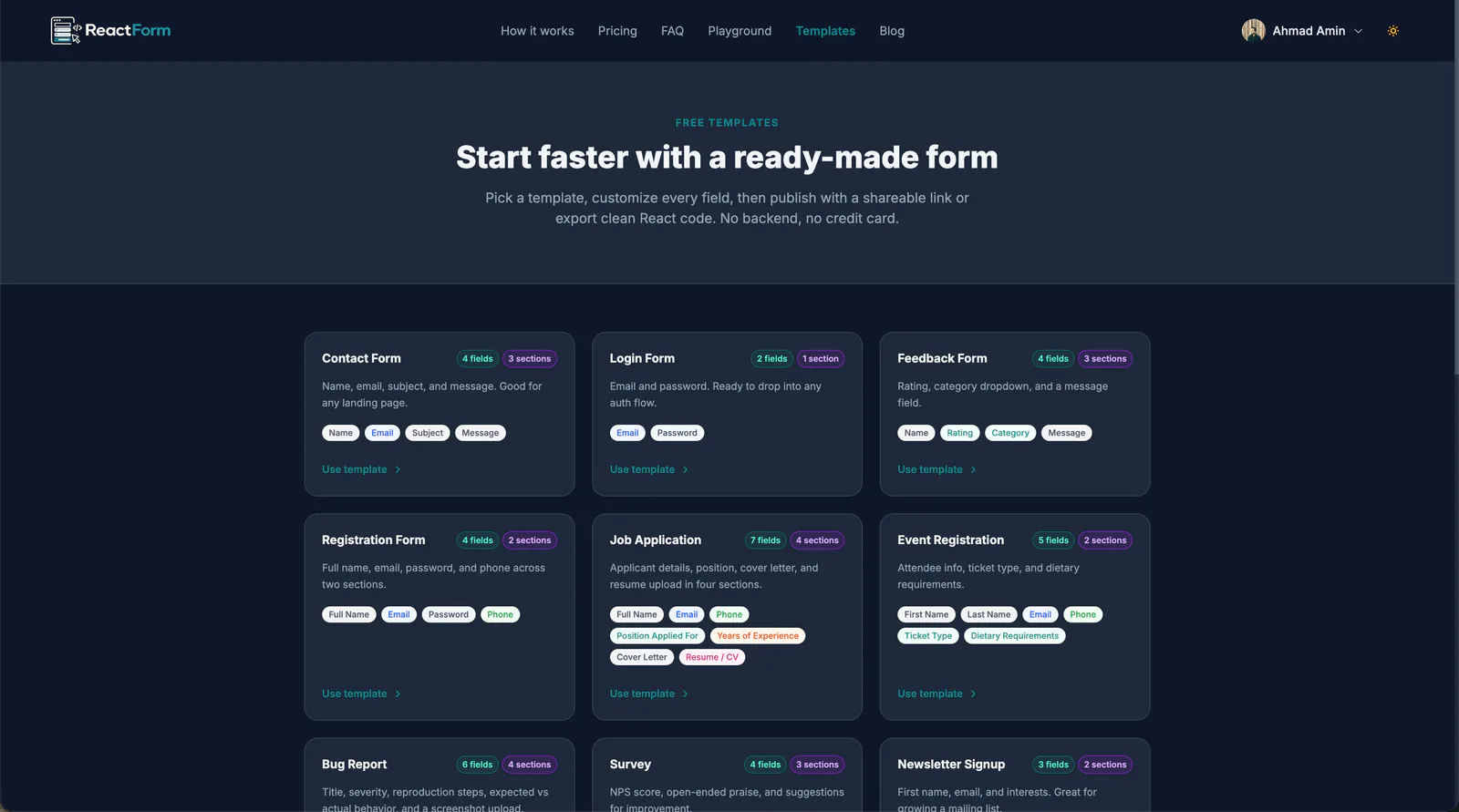
Either path starts from the same builder, with 11+ field types (text, email, phone with country codes, file upload, rating, checkbox groups, and more) across as many sections as the form needs. If you don't want to start from a blank canvas, there's a library of ready-made templates — contact forms, job applications, event registration, bug reports — each one fully editable after you drop it in.
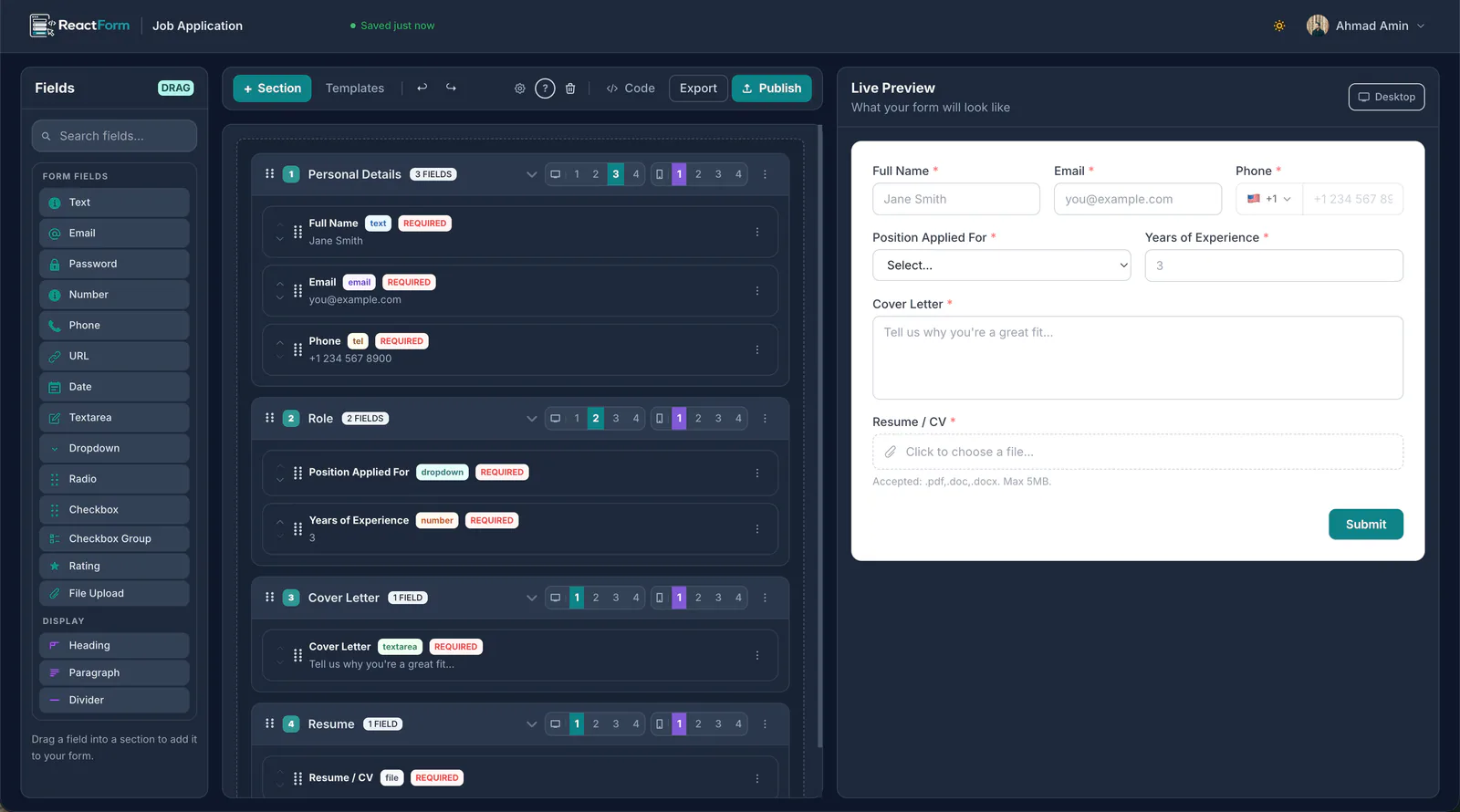
The builder
The editor is a drag-and-drop canvas on the left, a live preview on the
right. Fields get dragged into sections, sections get reordered, and every
field carries its own validation and per-breakpoint column span — so a
"Full Name" and "Email" pair can sit side by side on desktop and stack on
mobile without touching CSS. The preview updates as you edit, and Code /
Export are one click away from the same screen.
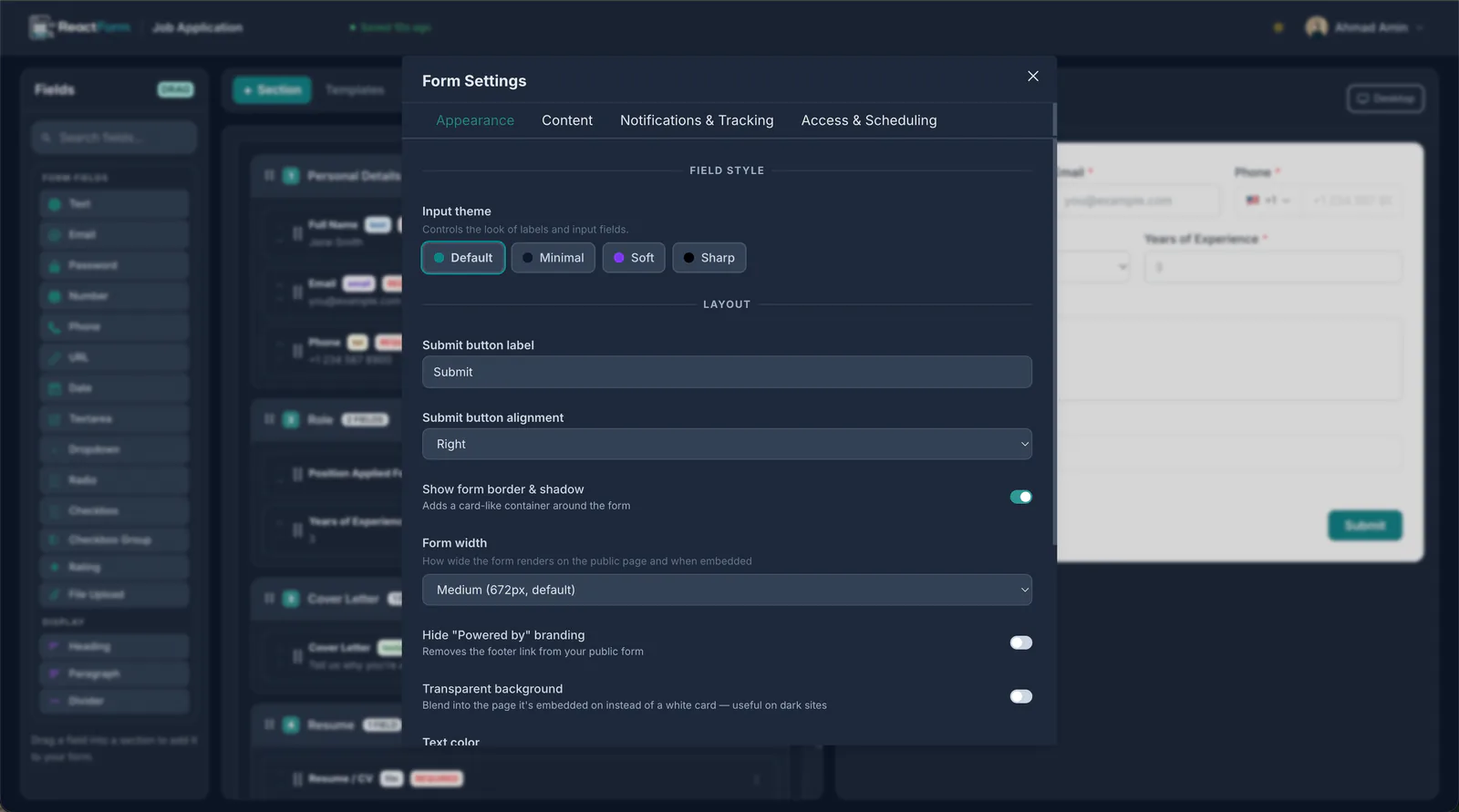
Making it match the rest of your site
A form that looks like it was bolted on from a different product is worse than no form at all, so most of the settings panel is about disappearing into whatever site it's embedded in: input theme (Default, Minimal, Soft, Sharp), submit button label and alignment, form width, whether the form renders with its own border and shadow or blends flat into the page, a transparent-background mode for dark sites, and the option to hide the "Powered by ReactForm" footer entirely.
Responses, without standing up a database
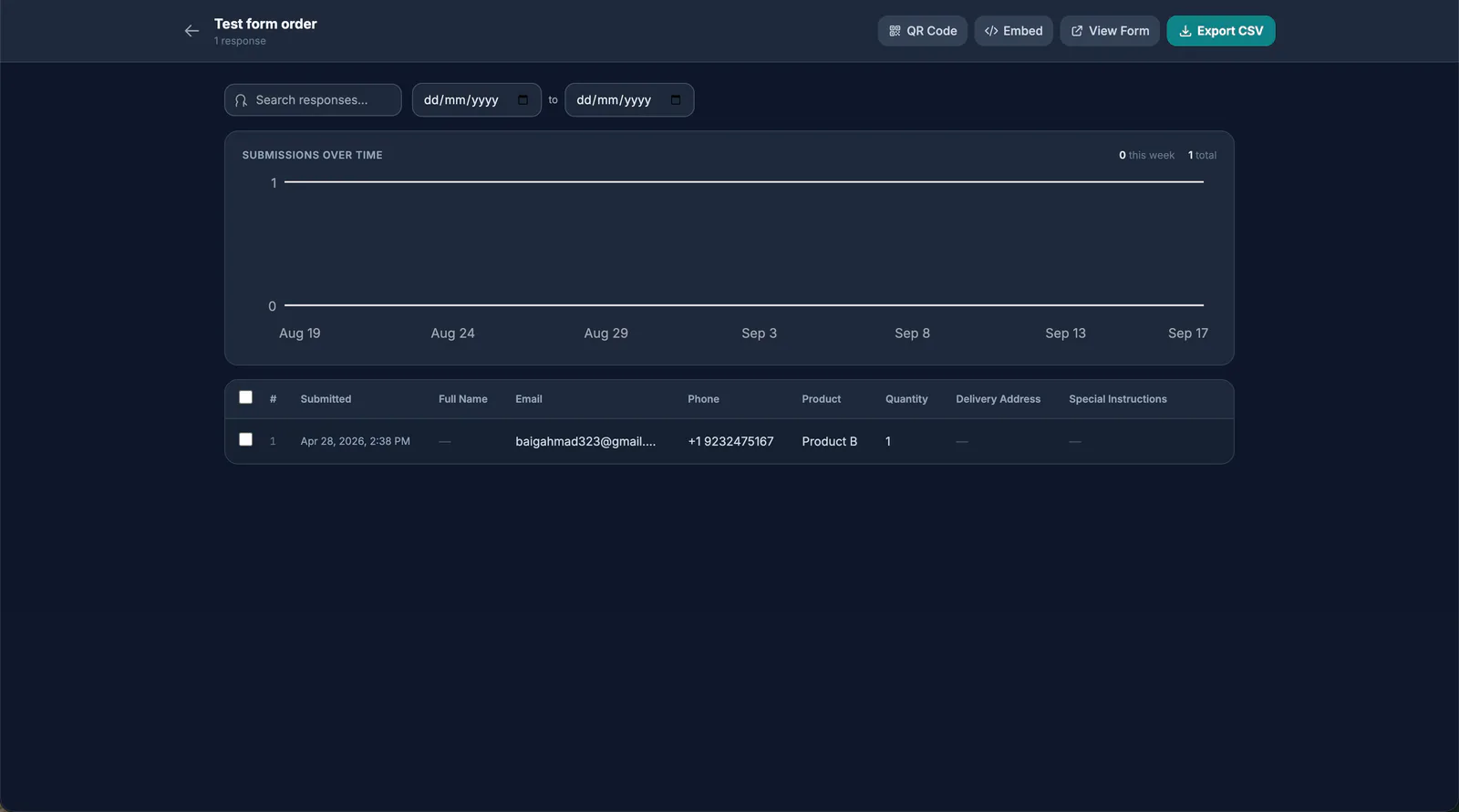
Every published form gets a response dashboard for free — a submissions- over-time chart, a searchable and date-filterable table of every response, and a one-click CSV export. The same screen has the QR code, the embed snippet, and a link to the live form, so sharing and reviewing responses don't need two different tools.
Try it
It's free to start, no credit card required — three forms on the free tier is enough to tell whether it fits how you work. If you're tired of rebuilding the same contact form for the fifth project in a row, ReactForm is built for exactly that moment.
Get new posts by email
Full-stack and DevOps notes, straight to your inbox when I publish. No spam, and you can unsubscribe any time.
Share this post